Puglia's Best Kept Destinations
Find the best routes to Lecce now
There’s something magical about Puglia that unfolds slowly in its rhythm. This isn’t the kind of region that shouts for attention. Instead, it quietly draws you in with sun-bleached stone towns, secret coves, and warm plates of handmade pasta. Perfect for travelers chasing authenticity, simplicity, and a deeper connection to place — especially by train.
This guide dives into some of Puglia’s most underrated gems. These are the places that don’t usually make it onto glossy brochures, but absolutely should. From the dramatic sea cliffs of Faraglioni di Sant’Andrea to the ancient cave dwellings of Gravina in Puglia, each destination brings its own flavor of beauty, history, and vibe. Expect train routes that wind through olive groves, tiny towns rich in tradition, and moments that feel completely untouched by modern tourism.
It’s all about slow mornings, scenic rides, local food, and stories that live in the stones. Whether you're into wild hikes, coastal swims, quiet piazzas, or sipping wine in whitewashed hilltop towns — this slice of Italy has something quietly unforgettable waiting for you. Just pack light, bring curiosity, and let the journey do the rest.
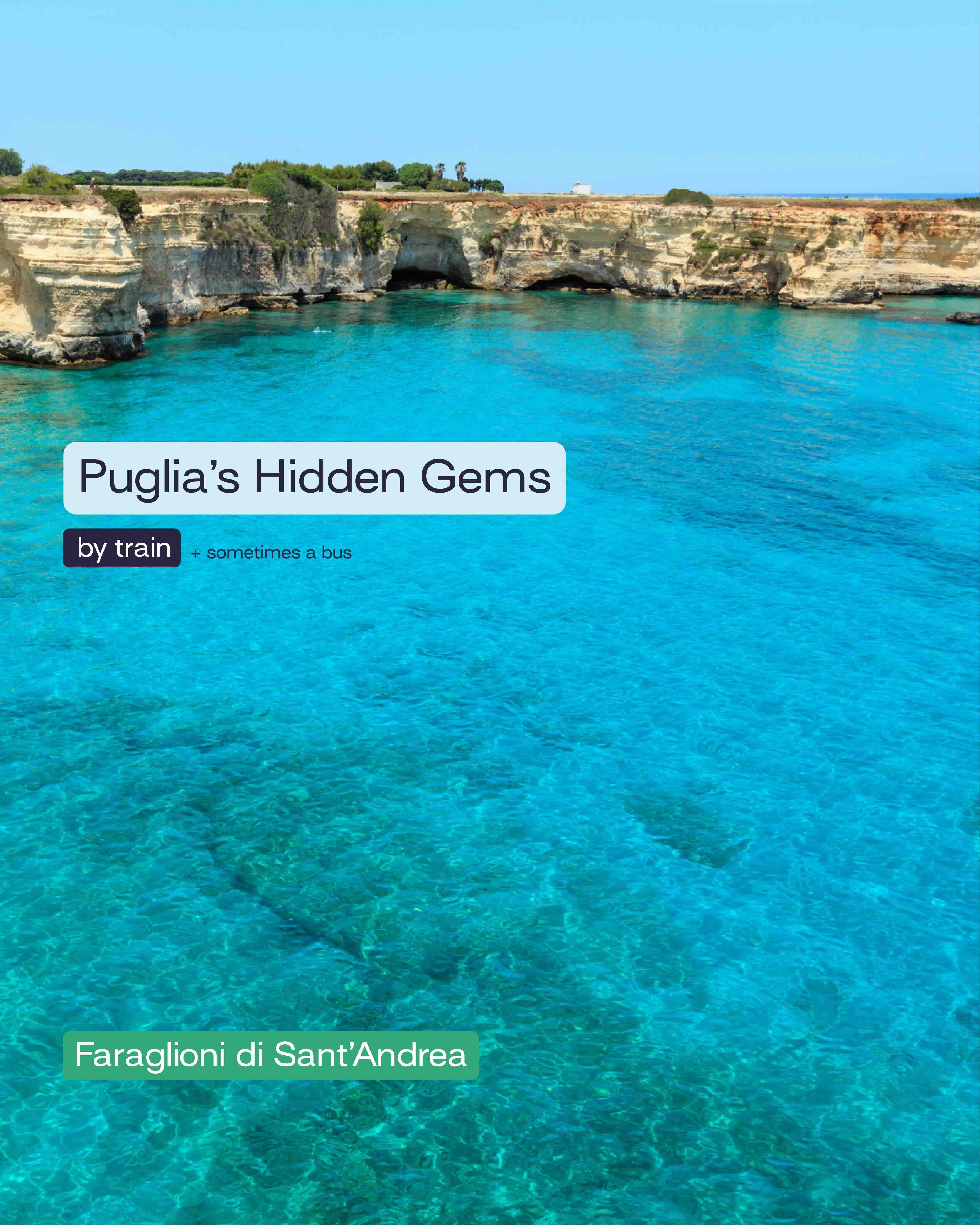
Faraglioni di Sant’Andrea
Discovering the Magic of Puglia
On the eastern coast of Italy, tucked into the rugged beauty of Puglia, lies one of the region’s most jaw-dropping natural wonders: the Faraglioni di Sant’Andrea. Think towering sea stacks, turquoise waters, and hidden coves carved out by centuries of waves. Perfect for anyone craving that blend of raw nature, salty breeze, and peaceful solitude.
Getting to Faraglioni di Sant’Andrea is easy, especially for those navigating Europe by rail. The closest train station is in Lecce, a charming Baroque city that’s absolutely worth a stop in itself. From Lecce, regional buses run regularly to Sant'Andrea. For those traveling light, renting a bike from one of the coastal towns is a fun and scenic way to reach the Faraglioni. There’s no ferry access directly to the cliffs, which adds to the secluded vibe — no crowds piling off boats, just a few travelers and locals soaking up the views.
What makes this spot so special isn't just the landscape. The sea stacks, sculpted into arches and towers by centuries of erosion, create a surreal seascape that changes with the light throughout the day. The area is surrounded by pristine waters perfect for swimming and snorkeling. In the early morning or golden hour, the cliffs glow with soft pastel hues, and there’s a kind of hush over the place that makes it feel sacred. Not far from the main stacks is the Grotta della Poesia, a natural swimming hole steeped in mythology and loved by cliff-jumpers and sunseekers.
For those into nature, photography, or just looking to unplug from the fast pace of city life, Faraglioni di Sant’Andrea is the ideal escape. It’s raw, windswept, and quietly breathtaking. Best suited for travelers who appreciate authentic local charm over touristy hotspots. This is the kind of place that lingers in memory because of what’s been left untouched. Bring sturdy shoes, a camera, and a deep breath.
Gravina in Puglia
Caves, Bridges, and Timeless Charm
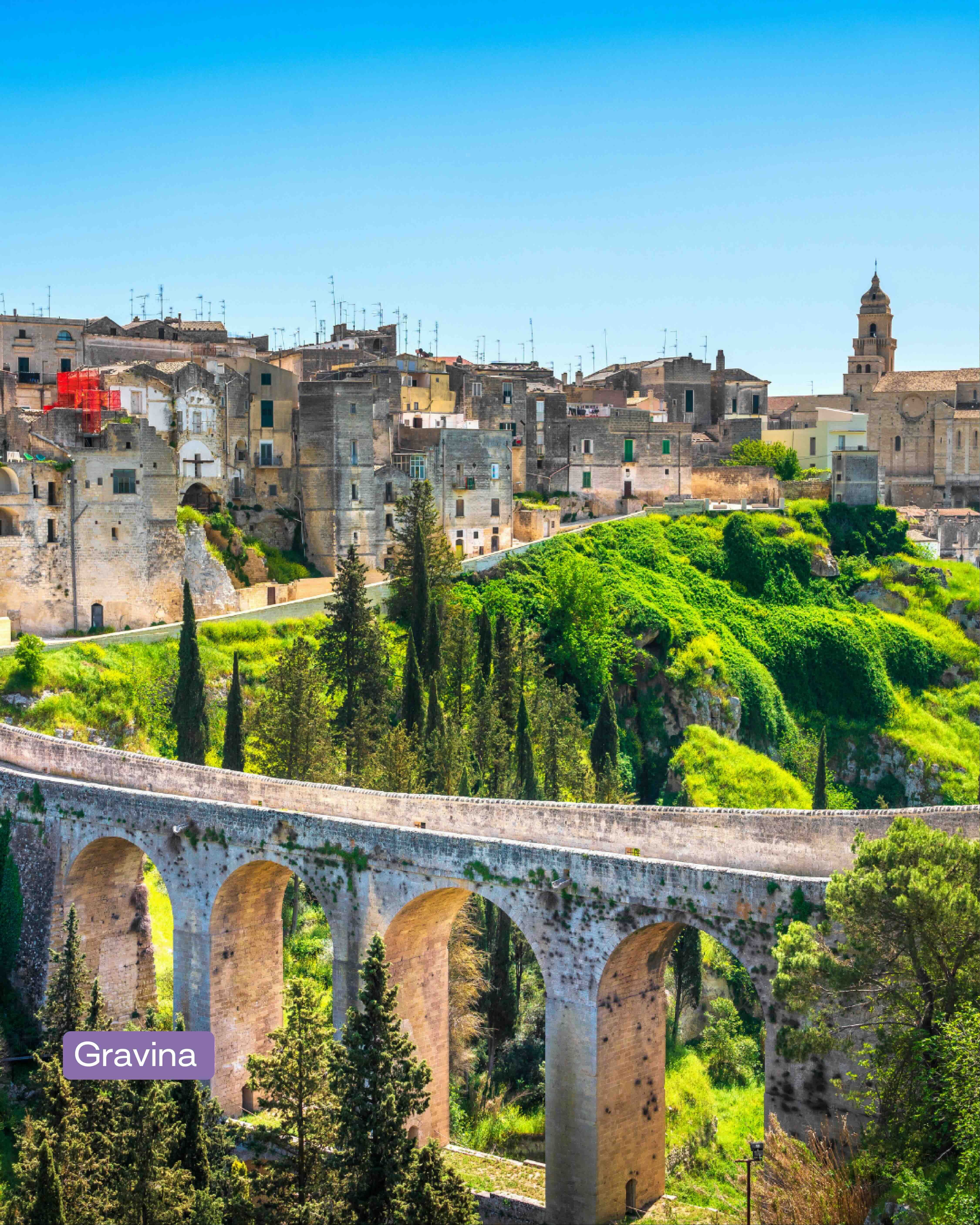 Gravina - StevanZZ
Gravina in Puglia is one of those underrated spots that quietly steals the show. Carved into a dramatic ravine, this ancient town is a mix of crumbling stone houses, underground tunnels, and cliffside churches that seem frozen in time. There's a raw, cinematic beauty here — all winding alleyways, panoramic views, and the kind of stillness that feels like stepping into another century. Perfect for those who love places that haven't been overrun by crowds and have a ton of character.
From Bari, one of Puglia’s major rail hubs, the Ferrovie Appulo Lucane line runs directly to Gravina. The journey takes about an hour and a half and winds through some pretty scenic countryside. No ferries in this part of Puglia, and while buses do connect the town to nearby spots like Altamura and Matera, the train is the easiest and most sustainable option for most travelers. Once in Gravina, the historic center is totally walkable.
What makes Gravina special is its layered history and how deeply it’s intertwined with the land. The town stretches across a massive canyon, with a dramatic stone bridge (the Ponte Acquedotto) linking both sides. Underneath the surface lies an entire underground city — ancient cisterns, cave dwellings, and even churches carved directly into the rock. Some of these spots can be visited with a local guide, offering a glimpse into the town’s past that’s way more engaging than any museum. Gravina also has a quiet food scene rooted in tradition offering rustic trattorias, handmade pasta, and local wines from nearby vineyards.
Gravina in Puglia is ideal for travelers looking to dig a little deeper into Italy’s lesser-known destinations. It’s got just enough modern comforts to make a few days feel both relaxed and enriching. Not the place for high-end nightlife or beach lounging — this is more for those into history, photography, hiking, and old-world vibes. A perfect side trip if you're visiting Matera, or a peaceful base for exploring the inland side of Puglia. For travelers craving authenticity and a bit of mystery, Gravina delivers in spades.
Rodi Garganico
Citrus Groves and Slow Southern Charm
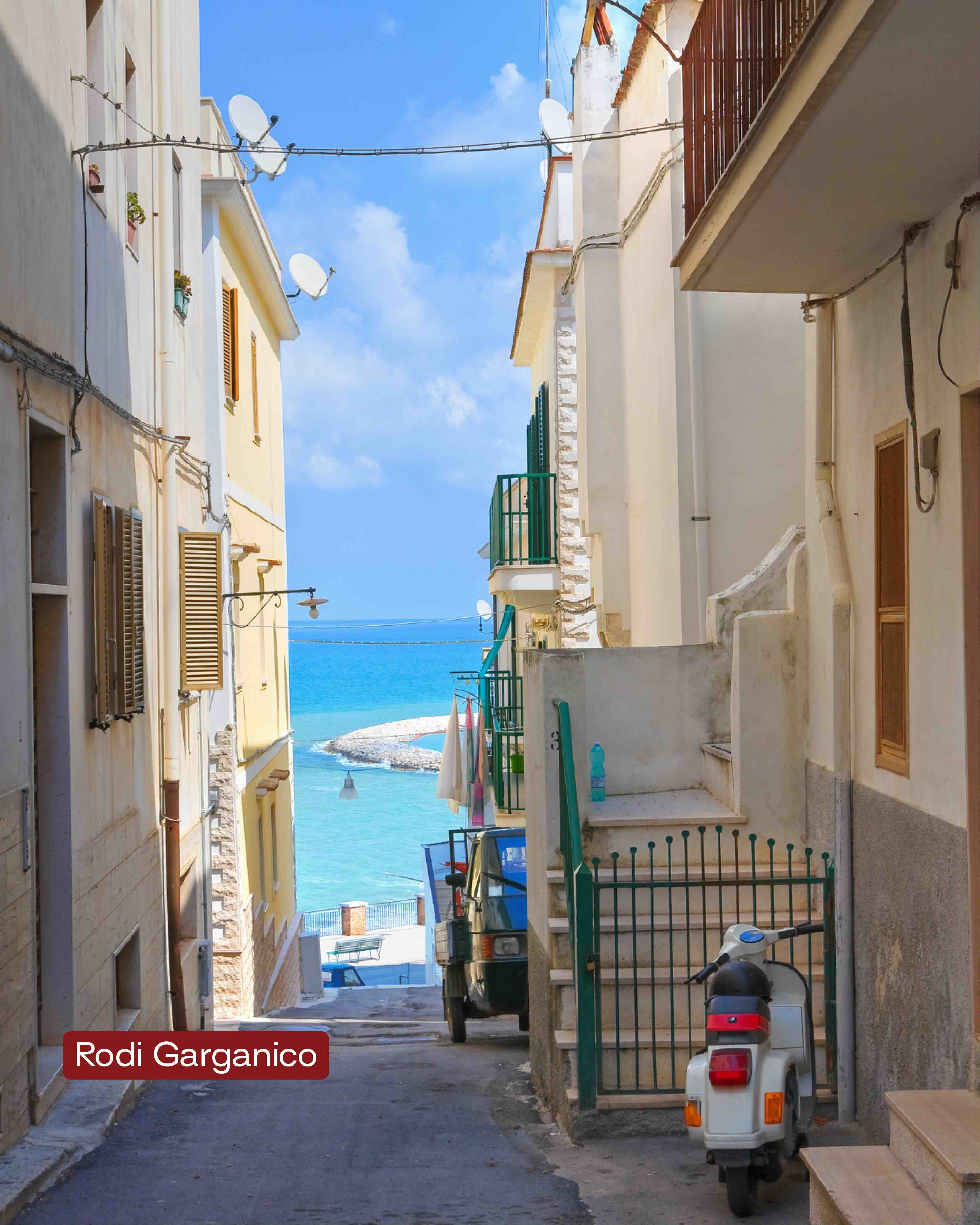 Rodi Garganico - milla1974
Perched on the northern edge of the Gargano promontory, Rodi Garganico is a laid-back coastal town that feels like a secret summer escape. Colorful houses tumble down toward the Adriatic, boats bob in the harbor, and the scent of citrus trees lingers in the warm air. While it’s not the flashiest destination in Puglia, it quietly delivers on charm, tradition, and natural beauty.
The train line from Bari connects to Stazione di San Severo, which then leads you all the way to Under Costa. It's a scenic ride, especially once the tracks start weaving through olive groves and limestone cliffs. From the station, the historic center and beach are a short walk away. There's a small ferry port offering connections to the Tremiti Islands — a dreamy option for a day trip if the sea’s calm.
What sets Rodi Garganico apart is its unique mix of nature, tradition, and easygoing coastal vibes. The town is famous for its citrus — particularly its orange and lemon groves that slope down to the sea. The local fruit is protected under a DOP label, and in season, the scent of blooming blossoms fills the air. Beyond the citrus, there’s a wide sandy beach, calm shallow waters perfect for a swim, and a historic old town with tight alleys and little spots for aperitivo. The port area is especially lively in the evenings, when locals stroll the promenade or gather at the seafood trattorias for fresh catch of the day.
Rodi is perfect for couples, solo adventurers, or anyone needing a digital detox by the sea. It’s all about slow mornings, golden afternoons on the beach, and discovering local flavors without the rush. Ideal for those who value nature, simplicity, and real local culture — with a strong bonus for anyone into citrus farming, coastal hikes, or ferry-hopping across the Adriatic.
Locorotondo
Whitewashed Charm in the Heart of Puglia
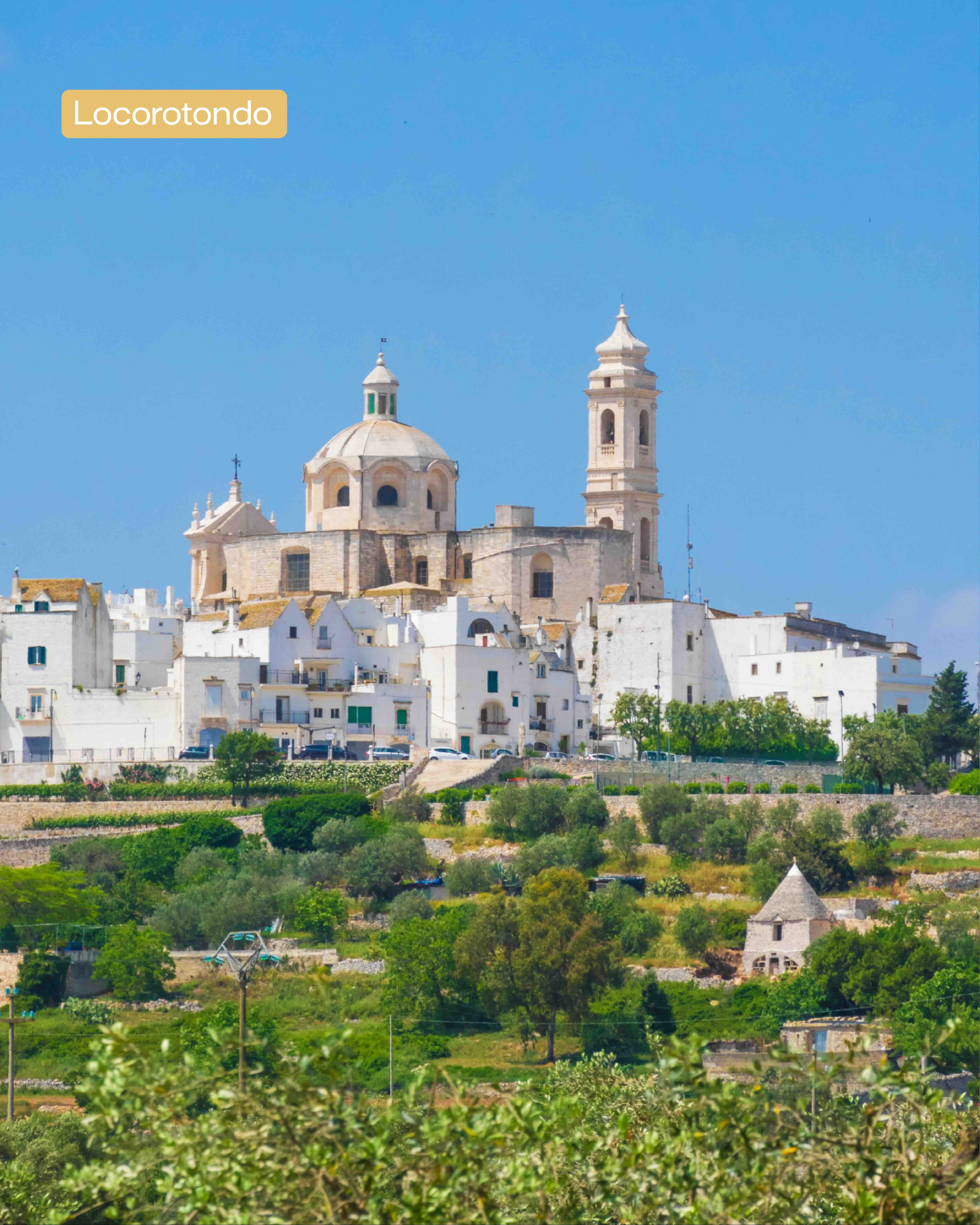 Locorotondo - ValerioMei
Locorotondo is one of those hilltop towns that seems to float above the Valle d’Itria, gleaming white under the southern sun. Known for its circular old town (hence the name), this tiny spot features narrow cobbled lanes, whitewashed houses with pointed “cummerse” roofs, and balconies overflowing with flowers. Everything feels neat, peaceful, and proudly local — no big crowds, just small moments of beauty tucked into every corner.
Reaching Locorotondo by train is easy and scenic. From Bari, hop on a regional bus, which stops right in Locorotondo. The train winds through olive groves, vineyards, and iconic trulli-dotted countryside — it’s half the fun of getting there. Trains are an option too, because they are usually more reliable and comfortable in this part of Puglia, however you might have a few more changes on your trip. This is an inland gem made for rail travelers.
What makes Locorotondo special is how well it blends beauty, tradition, and a deep sense of calm. The centro storico is compact and walkable, filled with quiet alleyways that open onto little squares and lookouts over the valley below. The architecture is unique for the region — lots of white stone, clean lines, and a touch of Greek island, but with a rustic southern Italian heart. Wine lovers will appreciate that this is one of Puglia’s key white wine regions, known for its crisp, dry Locorotondo DOC — perfect for pairing with local cheeses or a plate of orecchiette.
Locorotondo is best for travelers who are drawn to slower rhythms and the kind of atmosphere that doesn’t need much noise to make an impression. It’s a peaceful stop to breathe in the scent of blooming jasmine, sip local wine, and watch the sun dip behind the hills. Great as a base for exploring other Valle d’Itria spots like Alberobello, Martina Franca, or Cisternino — but also totally worth a visit on its own. For those into quiet charm, walkable towns, and low-impact travel, Locorotondo hits all the right notes.
Specchia
Timeless Beauty in the Heel of Italy
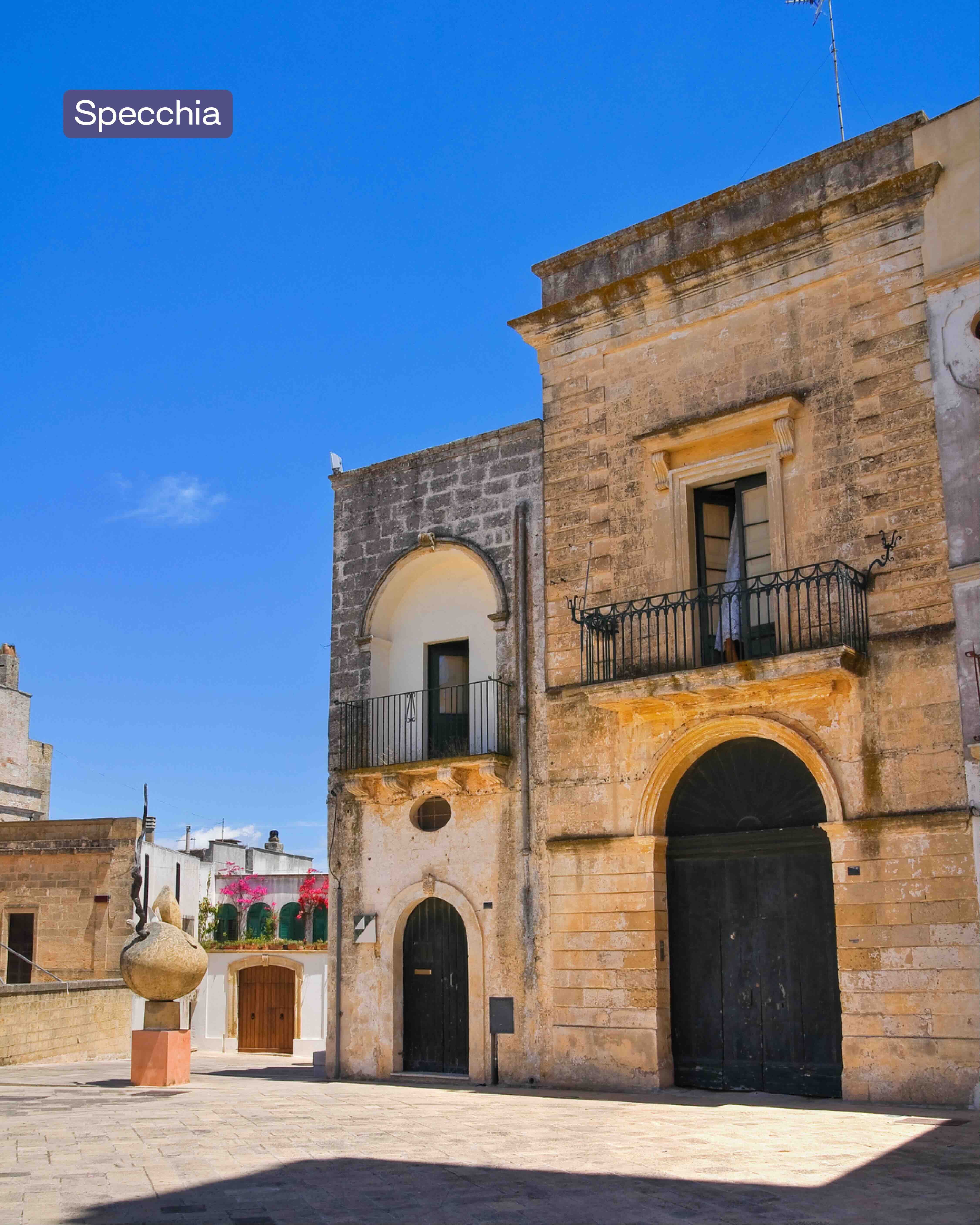 Specchia - milla1974
Tucked away in the southern tip of Puglia, Specchia is one of those small towns that feels completely untouched by time. It’s officially recognized as one of Italy’s “Borghi più belli” — the most beautiful villages — and it absolutely lives up to the title. Expect honey-colored stone buildings, quiet alleyways, and a historic center that looks like it hasn’t changed in centuries. The vibe is calm, local, and seriously charming. It’s the kind of place where mornings start with the sound of church bells and end with aperitivo under a fig tree.
Getting to Specchia by train is straightforward with a little planning. From Lecce it’s just a connecting local bus to Specchia. The journey cuts through olive groves and flat Salento landscapes — totally worth looking out the window for.
What makes Specchia stand out is how there are no tour buses, no souvenir shops, just real southern Italy. The historic center is a maze of cobblestone streets, quiet courtyards, and old palazzi, some of which are now art studios or guesthouses. There are ancient underground oil mills hidden beneath the town, which can be visited with a guide. In the evenings, the piazzas fill up with locals, musicians, and the soft glow of lanterns — it’s full of soul.
Specchia is perfect for travelers who are into slow travel, authentic experiences, and places that still feel genuinely local. Not much in the way of big attractions or flashy sights — instead, it’s all about atmosphere, architecture, and connection to the land. It’s a great base for exploring the southern Salento region by train or bike, and ideal for those who want to unplug and recharge somewhere beautiful. If the idea of sipping espresso in a centuries-old piazza, surrounded by stone and silence, sounds like a dream — Specchia delivers.
Laterza
Wild Canyons, Slow Food, and Ceramic Traditions
 Laterza - ermess
Laterza is one of those places that flies under the radar — but shouldn’t. Set on the edge of a massive canyon in the Taranto province, this quiet town mixes dramatic landscapes with deep-rooted traditions and a strong connection to nature. The old town has a rustic charm, all pale stone walls, winding alleys, and sun-bleached churches. But what really makes Laterza stand out is how it balances untamed nature with a deep culinary and artistic culture. It’s quiet, authentic, and full of small surprises.
Getting to Laterza by train takes a bit of coordination, but it’s doable and absolutely worth it. The closest major station is in Gioia del Colle, which is well connected to Bari and Taranto by regional trains. From there, buses run to Laterza a few times a day. The ride into town passes through the Murgia plateau — open, raw, and dotted with olive groves and farms. No ferries out here, just countryside roads and peaceful views. It’s also a good idea to check local schedules ahead of time or team up with other travelers for a shared ride from the station.
The real showstopper here is the Gravina di Laterza, one of the largest canyons in Europe. It’s a paradise for nature lovers. The canyon is part of the Terra delle Gravine regional park, and guided walks are available for those wanting to explore its rare flora and fauna. Laterza is also known for its ancient ceramic-making tradition, with workshops still producing hand-painted pottery in classic Mediterranean styles. Then there’s Laterza’s famous bread, which has DOP status and a crust that’s basically legendary.
Laterza is perfect for travelers who want to get off the beaten path and dive into nature, tradition, and real-deal southern Italian culture. It’s not polished or touristy — which is exactly the point. The town works best for those into hiking, slow food, and small-town vibes, or for anyone looking to disconnect and explore Puglia’s wilder side. Ideal as a stop between Matera and Taranto or as a quiet base for exploring the Murgia region by foot or bike.
Santa Maria al Bagno
Crystal Waters in Salento
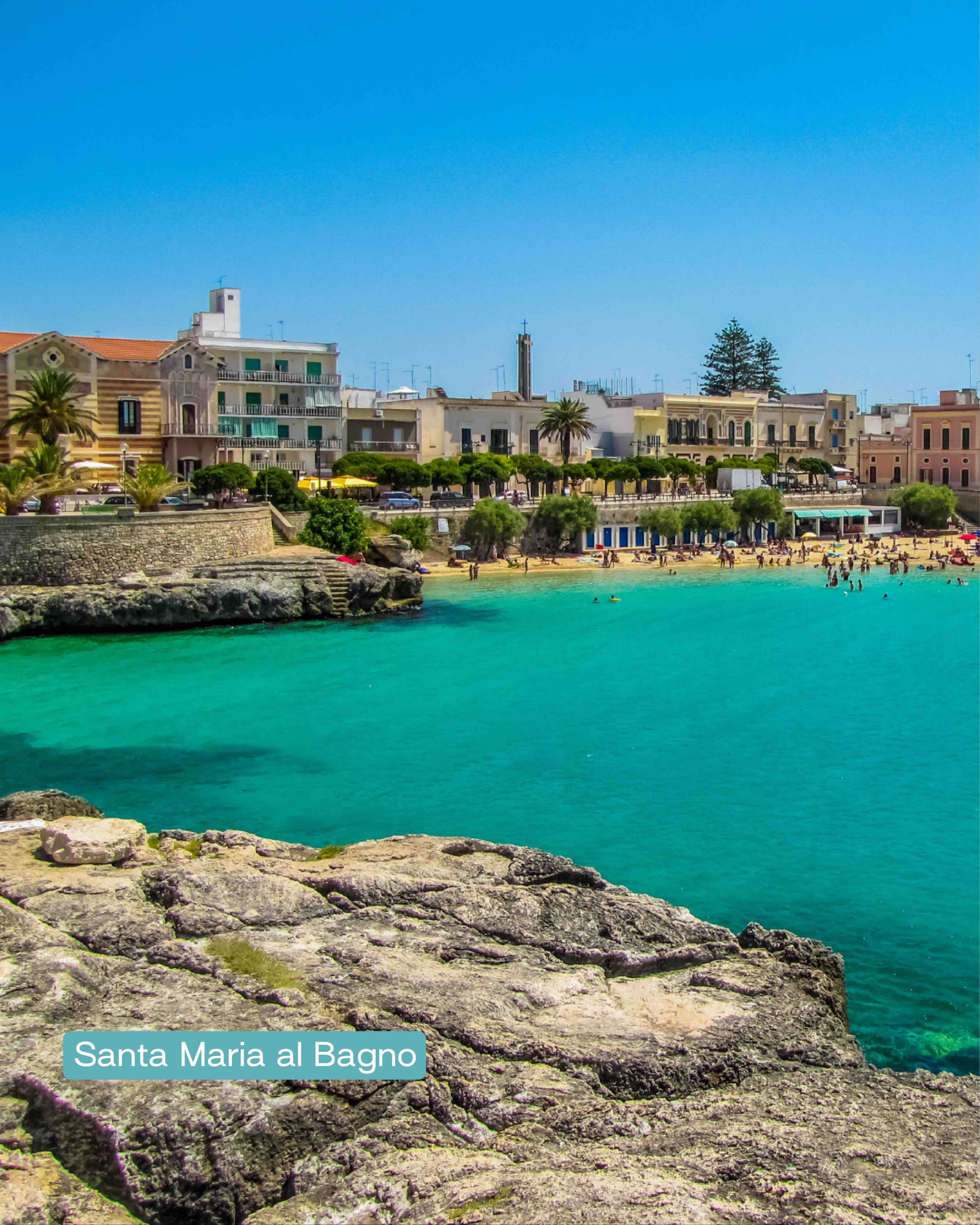 Santa Maria al Bagno - Diego Fiore
Santa Maria al Bagno is the kind of coastal village that feels like a best-kept secret. Tucked along the Ionian Sea between Gallipoli and Porto Cesareo, this little seaside town has an easygoing rhythm and clear water. With a small sandy beach, pastel-colored buildings, and just enough restaurants to keep things interesting, it’s ideal for laid-back days by the sea. Everything here feels local, sun-washed, and refreshing.
Getting to Santa Maria al Bagno by public transport is simple with a bit of planning. The closest major rail station is in Lecce, which is well-connected to Bari, Brindisi, and other parts of Puglia. From Lecce, take a regional train to Nardò, the nearest inland town. From there, local buses run directly to Santa Maria al Bagno, especially in the summer months. It’s also easy to reach by bike or scooter if staying nearby — the coastal road offers beautiful sea views all the way into town. No ferry service here, just a scenic stretch of coastline waiting to be explored.
What makes this place really special is the water. The bay is small but stunning, with shallow, turquoise waves and calm conditions that make it great for swimming, paddleboarding, or just floating around with zero effort. There’s a charming promenade lined with gelato shops, cafés, and seafood spots where locals gather in the evening for a slow stroll and an aperitivo. For history lovers, there’s also the Museo della Memoria e dell’Accoglienza, a small but powerful museum about the Jewish refugees who passed through the town after World War II. And for those into nature, the Porto Selvaggio Natural Park is just a short distance away — think coastal hiking trails, pine forests, and hidden rocky coves.
Santa Maria al Bagno is made for travelers looking for calm, sun, and that classic Mediterranean feel without the flashiness of bigger resort towns. Best suited to those who enjoy swimming, sunsets, and simple pleasures like good bread, fresh seafood, and evening walks along the sea. For those exploring Puglia by train and craving a few quiet days by the coast, this little town hits the sweet spot between beachy and authentic.
 Map of the best kept destinations in Puglia
25.06.2025